
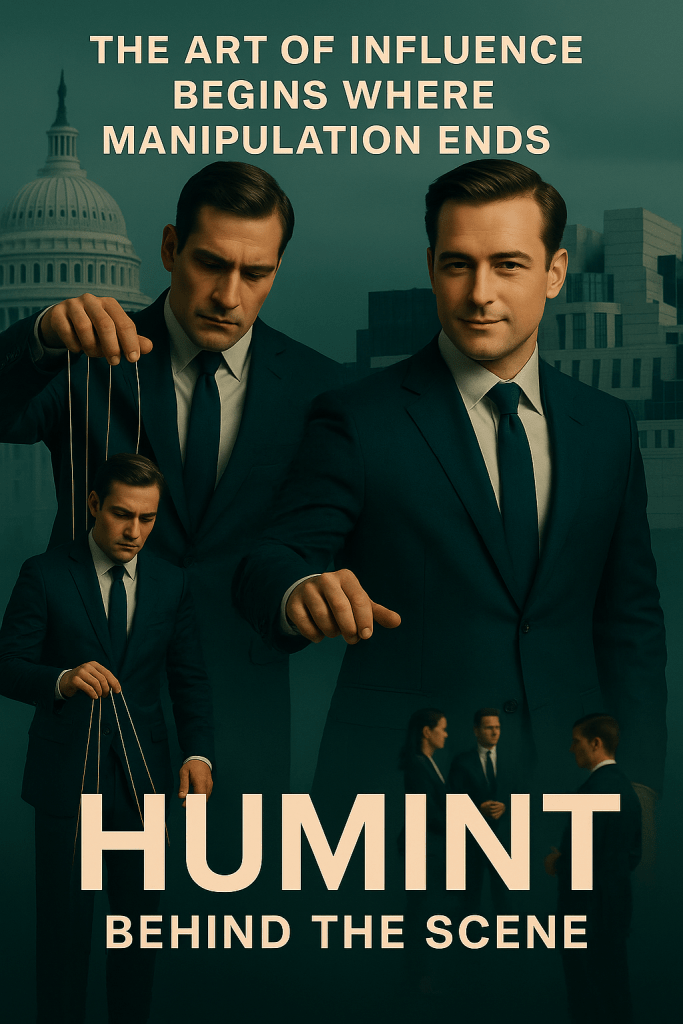
Influence and manipulation are too often confused.
And that’s a critical mistake.
Manipulation is direct, often crude, rooted in a dynamic of domination.
It seeks to impose behavior, force action, extract a reaction.
It is visible — therefore detectable.
It is short-term — therefore vulnerable.
Influence, on the other hand, is of a completely different nature.
It is underground, subtle, strategic — and it plays the long game.
It is not exercised directly — it spreads.
It doesn’t act on behavior, but on context.
It doesn’t give orders — it creates the conditions in which the other person wants to say, do or decide what you’ve already anticipated.
Influence doesn’t need to be believed to be effective.
It operates through indirection, by activating a powerful lever: the human mediator.
—
The other becomes the agent of your design.
And that’s where the finesse lies: they don’t realize it.
They think they’re deciding.
Sometimes, they even think they’re in control.
A fatal mistake.
Because while they believe they’re in charge, they’re actually playing the role scripted by the framework you’ve engineered.
They react exactly as your subtle networks of influence have guided them to.
The illusion of dominance is one of influence’s sharpest tools.
An opponent who thinks they’re manipulating you… is unknowingly executing your plan.
—
Influence is a quiet art.
It doesn’t seek to win — it seeks to trigger.
It doesn’t aim to seduce — but to shape the environment.
It doesn’t push for action — it sets the stage for action to arise on its own.
—
In the world of power, governance, and strategic decisions,
those who understand the difference are masters of the game.
The others… are just players.
—
And you — in your environment —
have you identified who truly influences the game?
Those who speak loudest?
Or those who reshape the board… without a word?
#HUMINT #Influence #Strategy #Leadership #DecisionMaking #ManipulationVsInfluence #HUMiNTAdvisory
 HUMINT Advisory & Executive Search®
Laisser un commentaire